
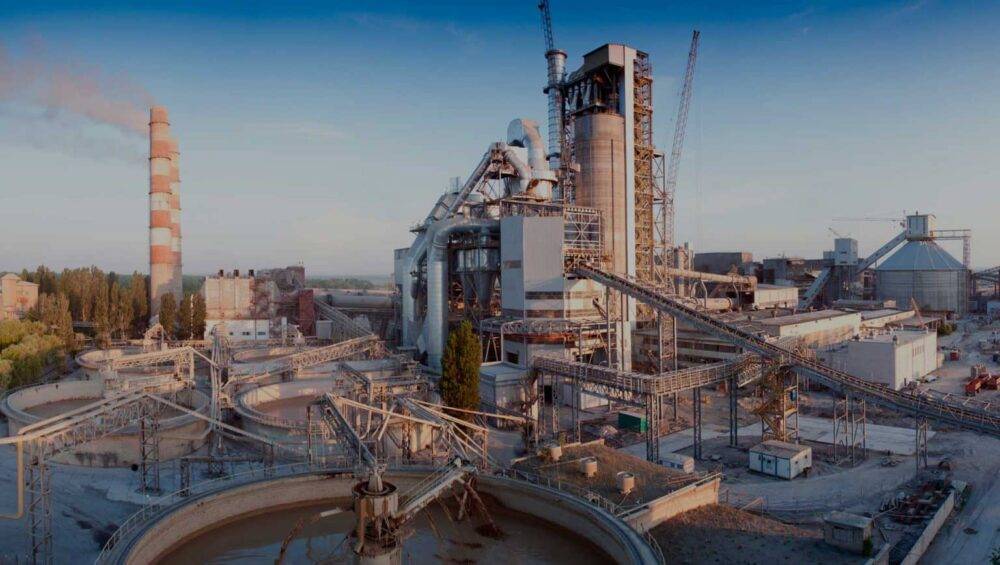
Are you searching for air pollution monitoring in South Africa? Cement manufacturing is the backbone of South Africa’s infrastructure — but it comes at an environmental cost. From raw material grinding to kiln operations and clinker production, cement plants are among the country’s most significant sources of industrial air pollution.
For plant managers, compliance officers, and environmental teams, understanding both the regulatory landscape and the right monitoring technology is no longer optional. It’s essential.
Understanding Air Pollution in Cement Industry South Africa
Cement production involves multiple processes that release pollutants into the air, including grinding, kiln operations, and material transportation. These activities contribute significantly to airborne emissions, making it essential to use an air monitoring device and advanced air quality monitors for accurate tracking.
But here’s the thing—without reliable air quality monitoring solutions; industries cannot measure pollution levels effectively or take timely action. This leads to inefficiencies and environmental risks, which is why modern systems with an air pollution monitor are widely adopted across cement plants for precise control.
Why Cement Plants Are Under Scrutiny
ement production is classified as a listed activity under South Africa’s National Environmental Management: Air Quality Act 39 of 2004 (NEMAQA) — the primary legislation governing industrial air emissions in the country. This classification means cement factories are legally required to obtain an Atmospheric Emission Licence (AEL) and comply with Minimum Emission Standards (MES) for a defined set of pollutants.
The core pollutants that cement plants must monitor and control include:
Industrial Manufacturing Emissions
- Particulate Matter (PM₁₀ and PM₂.₅) — generated during milling, raw material handling and kiln exhaust
- Nitrogen Oxides (NOₓ) — produced during high-temperature fuel combustion in kilns
- Sulfur Dioxide (SO₂) — released during raw material processing
- Carbon Dioxide (CO₂) — a byproduct of the energy-intensive clinker process
- Carbon Monoxide (CO) and Volatile Organic Compounds (VOCs) — from incomplete combustion and chemical processes
- Research has shown that South Africa’s cement sector carries a relatively high emissions intensity, with projections requiring approximately a 4% annual decline in CO₂ intensity to align with net-zero 2050 goals — making real-time, accurate monitoring more urgent than ever.
The Regulatory Framework: What the Law Requires
The South African regulatory environment has grown significantly more demanding in recent years. Key compliance obligations for cement manufacturers include:
Atmospheric Emission Licenses (AEL)
All cement plants must operate under an AEL, which mandates regular emissions of monitoring and reporting. Operating without a valid license — or failing to meet the conditions of one — can result in enforcement action, including facility shutdowns.
Continuous Emission Monitoring (CEM)
Larger installations — typically those with heat inputs exceeding 100 MW — are required to continuously monitor PM, SO₂ and NOₓ. Smaller units may use periodic monitoring for certain pollutants, but the direction of regulation is clearly toward more frequent and automated measurement.
Greenhouse Gas Reporting
Under the National GHG Emission Reporting Regulations (Gazette 47257, August 2022), cement factories are now required to report CO₂ emissions formally. This has added a new layer of compliance documentation to existing monitoring obligations.
Priority Area Regulations
Cement plants located within Air Quality Priority Areas — such as the Highveld — are subject to additional and stricter emission reduction obligations introduced in early 2022. These regulations require active emission reduction plans, not just passive monitoring.
Dust Fallout Monitoring
Regulations require dedicated dust fallout monitoring programs at cement facilities. If standards are exceeded, plants must develop and implement formal abatement plans — and demonstrate progress in reducing emissions.
About AirSENCE
AirSENCE is an advanced air quality monitoring solution designed for high-precision environmental monitoring in industrial environments. It works as a reliable air monitoring device, helping industries track pollution levels accurately and maintain better control over emissions.
It also functions as a powerful air quality measuring device that captures real-time data across multiple pollutants and environmental parameters. With advanced sensing technology, AirSENCE delivers consistent performance and acts as a dependable air pollution monitor for accurate and continuous monitoring.
Types of Monitoring Systems
Modern air pollution monitoring in South Africa includes advanced systems like air pollution monitor and smart sensor networks for efficient emission tracking.
1. Industrial Monitoring Systems
- Designed for factories and plants, these systems track emissions using an advanced air pollution monitor.
2. Dust Monitoring Systems
Used in high-dust areas, these systems rely on a precise air pollution measuring device to track particulate matter.
3. IoT-Based Monitoring Systems
Connected systems using smart air quality sensors for real-time dashboards and remote monitoring.
By integrating intelligent air quality sensors with a reliable air pollution measuring device, industries can achieve accurate, real-time monitoring and better environmental control.
How AirSENCE Addresses These Needs
AirSENCE, developed by A.U.G. Signals Ltd., is an advanced air quality monitoring platform built specifically for demanding industrial environments. It is designed to meet the monitoring requirements that South African cement plants face under NEMAQA and related regulations.
The AirSENCE product range includes three solutions tailored to different operational needs:
1. AirSENCE Standard
offers the highest degree of customization and is the most flexible option. It is the preferred choice when monitoring of both particulate matter (PM) and gases is required. AirSENCE Standard can include any parameters (PM, gases, and additional environmental parameters such as wind speed and direction, rainfall, noise, and light).
2. AirSENCE Dust-Watch
is the choice if gas monitoring is not required, and other environmental parameters such as wind speed and direction, rainfall, noise, and light are needed. Support will continue as previously communicated.
3. AirSENCE CUE
is our new, more compact product variant. It monitors PM and CO₂, along with temperature and humidity.
Across all three products, AirSENCE uses machine learning-based data processing and automatic sensor drift correction to maintain consistent accuracy — reducing the risk of compliance failures caused by unreliable data.
Call: +1-416-923-4425
Email: info@airsence.com
The Cost of Getting It Wrong
Non-compliance with NEMAQA and AEL conditions carries serious consequences for cement operators:
- Financial penalties and legal liability under environmental law
- Suspension or revocation of operating licenses
- Reputational damage and community opposition — particularly in regions where cement dust already affects residents
- Worker health risks from undetected pollutant spikes, leading to potential liability and absenteeism.
- Beyond legal risk, the operational cost of not monitoring is significant. Without real-time visibility into emission sources, plants cannot respond quickly to equipment failures, process inefficiencies or environmental exceedances — leading to wasted resources and unplanned downtime.
Key Features of AirSENCE Devices
AirSENCE delivers advanced air pollution monitoring in South Africa, combining a powerful air monitoring device with intelligent features for precise and continuous tracking.
- Real-time monitoring every minute
- Multi-parameter tracking (gases, PM, weather)
- Machine learning-based data processing
- Automatic sensor drift correction
- Secure cloud-based storage
- Low power consumption
- Easy installation and deployment
With a reliable air quality measurement tool and smart air quality monitoring solutions, AirSENCE ensures efficient, secure and scalable monitoring for modern industrial needs.
Challenges Without Monitoring Systems
Without advanced air pollution monitoring in South Africa, even reliable systems like AirSENCE cannot provide the full benefits of a precise air monitoring device for real-time insights.
- No visibility into real-time pollution levels
- Difficulty identifying emission sources
- Delayed response to environmental hazards
- Increased compliance risks and penalties
By implementing AirSENCE with a smart air pollution monitor and accurate pollution measurement device, industries can eliminate these challenges and ensure compliance, safety and efficiency.
Why Cement Industries should choose AirSENCE for Air Pollution Monitoring in South Africa
AirSENCE delivers advanced air pollution monitoring in South Africa, combining a reliable air monitoring device with IoT-enabled technology for accurate and real-time insights.
Why choose AirSENCE?
High accuracy and reliability
Delivers precise and consistent data using advanced sensors and calibration techniques, ensuring dependable results for critical environmental monitoring and decision-making.
Real-time monitoring capabilities
Continuously tracks air quality with instant data updates, allowing industries to respond quickly to changing pollution levels and potential risks.
Scalable deployment across multiple sites
Easily expandable across different plant locations, enabling centralized monitoring and control through connected systems.
Low maintenance and cost-effective
Designed for long-term operation with minimal servicing requirements, helping reduce maintenance costs and improve overall efficiency.
Advanced IoT-enabled monitoring
Integrates smart IoT technology for remote access, cloud-based data storage and real-time analytics, making monitoring more intelligent and accessible.
With a powerful air quality measurement tool and scalable air quality monitoring solutions, AirSENCE ensures efficient, cost-effective and future-ready environmental monitoring.
Get in Touch
Ready to upgrade your air pollution monitoring? Contact the AirSENCE team:
Email: info@airsence.com
Address: 103 – 73 Richmond Street West, Toronto, Ontario, Canada
Phone: +1-416-923-4425
Conclusion
Air pollution monitoring in South Africa’s cement industry sits at the intersection of regulatory obligation, operational efficiency, and environmental responsibility. With NEMAQA requirements becoming more rigorous and the sector’s emissions profile under increasing scrutiny, the case for investing in advanced, real-time monitoring technology has never been stronger.
AirSENCE offers cement manufacturers a scalable, low-maintenance and highly accurate solution designed specifically for the conditions found in industrial plants. Whether you are looking to meet your current AEL obligations, prepare stricter future standards or simply gain better operational insight, AirSENCE provides the data you need to act with confidence.
FAQs – Air Pollution Monitoring in South Africa’s Cement Industry: What You Need to Know
Q1. What are air pollution monitoring devices for the Cement Industry in South Africa?
Ans. These are advanced systems like AirSENCE that measure and track pollutants such as dust, gases and particulate matter in cement plants.
Q2. Why are air quality monitors important in cement plants?
Ans. They help industries control emissions, ensure compliance and maintain safe environmental and workplace conditions.
Q3. How does AirSENCE monitor air pollution?
Ans. AirSENCE uses advanced air quality sensors and real-time data processing to provide accurate and continuous pollution monitoring.
Q4. Can AirSENCE be used for multiple locations?
Ans. Yes, AirSENCE supports scalable deployment, allowing monitoring across multiple sites with centralized data access.
Q5. Is AirSENCE cost-effective for cement industries?
Ans. Yes, it offers low maintenance, real-time insights and long-term efficiency, making it a cost-effective air monitoring solution.